
Guide
CNC plasma cutting: the guide.
How it works, which cutter to choose, what thicknesses, which files, table or robot: everything you need to know before buying — written by a workshop that cuts every day.
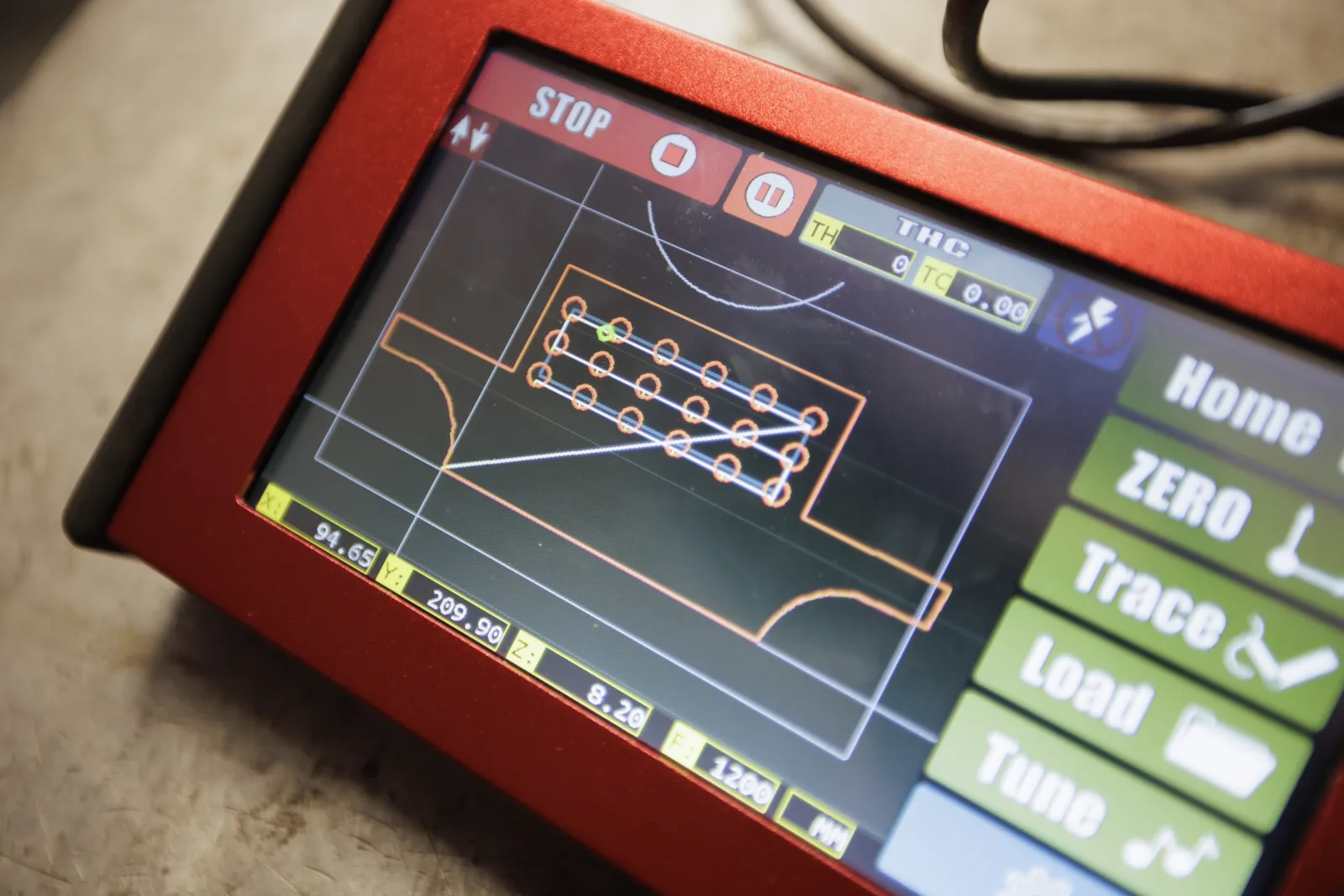 DXF · G-code45 A · 12 mm
Plasma cutting melts metal with an electric arc blown by compressed air. The CNC version adds a machine that moves the torch instead of your hand: the part comes out identical every time, with clean curves and aligned holes. For twenty years that meant a 4 to 6 m² table, a computer and CAM software. It is no longer the only option.
This guide gathers what we explain on the phone every week to metalworkers, farmers, body shops and enthusiasts. It is independent of the machine you will choose — even if you can guess ours.
1. The principle
A plasma cutter generates an arc between an electrode and the sheet, through a nozzle that concentrates the jet of ionised air at over 20,000 °C. The metal melts, the air blows it away: the kerf is 1 to 2 mm depending on the nozzle. In CNC, the torch is carried by a machine that follows a path (a trace or a file) at constant speed, keeping a stable cutting height — that is torch height control, or THC.
2. The cutter
It sets the maximum thickness and the cut quality. Three criteria matter for CNC: amperage (45 A for 12 mm of clean steel, 65–85 A for 20–25 mm), the start type (pilot arc or touch start — never high frequency, which interferes with electronics) and the presence of a CNC output, which provides the trigger and the arc voltage for THC. A compressor capable of 200 l/min at 6 bar of dry air completes the setup.
3. The machine
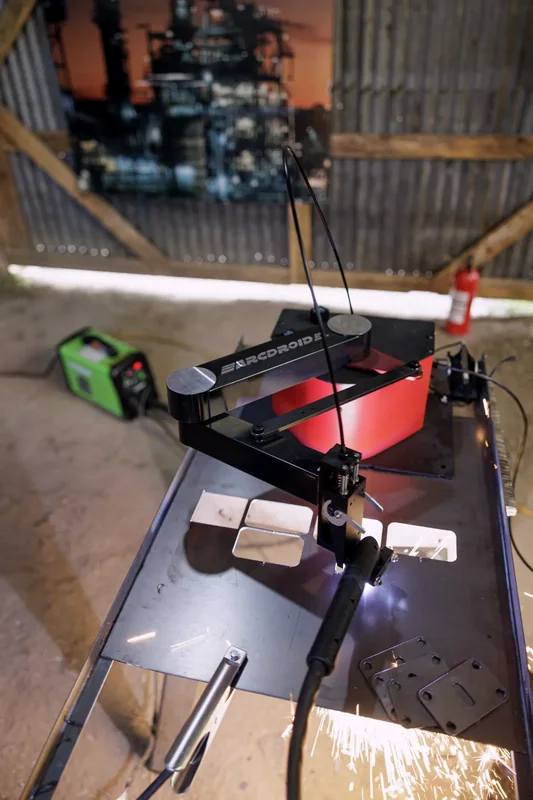
Two families. The gantry table: a fixed frame with rails, the sheet on top, a large area (often 1,500 × 3,000 mm), a computer to drive it. The benchtop robot: an articulated arm set on the bench or directly on the sheet, 660 × 380 mm per position, a touch-screen controller, portable. The first wins on full sheets, the second on price, space, setup time and mobility.
4. The files
A CNC machine reads G-code: a list of moves. You get it from a drawing (DXF) run through CAM software that adds speeds, contour order and kerf compensation. Fusion 360, SheetCAM, QCAD/CAM and Estlcam cover every need. Some machines do without it for simple parts: you trace the outline with a stylus, the machine memorises and cuts.
5. Safety
Radiation, sparks, fumes: tinted goggles (shade 5 minimum), gloves, cotton or leather clothing, extraction or ventilation, nothing flammable within 10 m. The part and the offcuts stay burning hot for several minutes. A fire extinguisher within reach is not a luxury.
The guide as a PDF
The complete guide, to read at the workshop.
The five chapters and the seven articles, laid out to be printed and annotated. Leave your e-mail: the PDF opens right away. We will write to you at most twice a year — news, demonstrations — never more.
PDF · free · no newsletter sign-up
Go further
Guide articles
 6 min read
Which plasma cutter should you choose for a CNC machine?
Amperage, arc start, CNC output, compressor: the four criteria that matter, and models that work.
Read →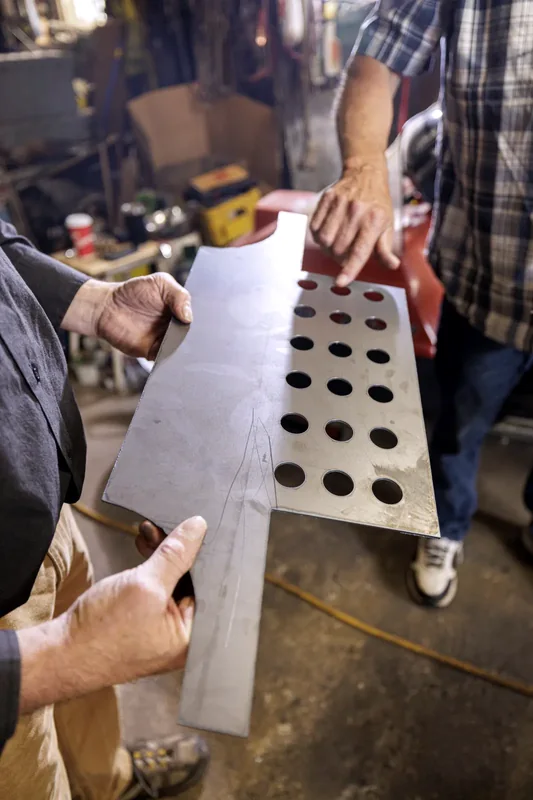 5 min read
Plasma cutting thickness: what a 45, 65 or 105 A unit really cuts
Clean cut, severance, speed: realistic figures by amperage for steel, stainless and aluminium.
Read →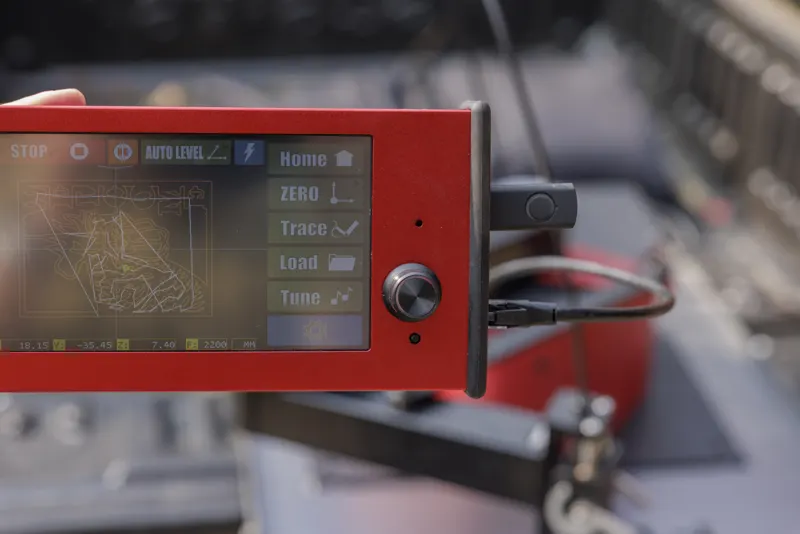 6 min read
From DXF file to G-code: preparing a CNC plasma cut
Draw, export, post-process, transfer: the complete chain, and when you can skip it.
Read →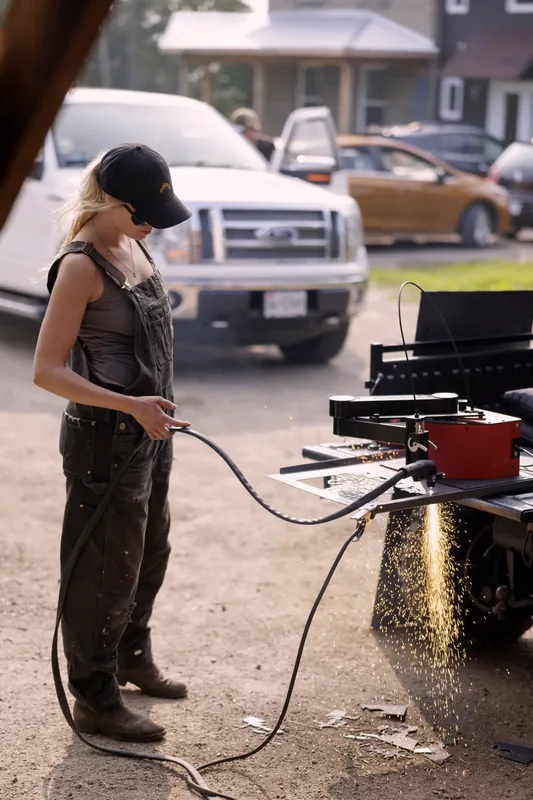 7 min read
CNC plasma table or portable cutting robot: which one for your workshop?
Real price, space, training, large sheets, mobility: the comparison we wish we had read before buying.
Read →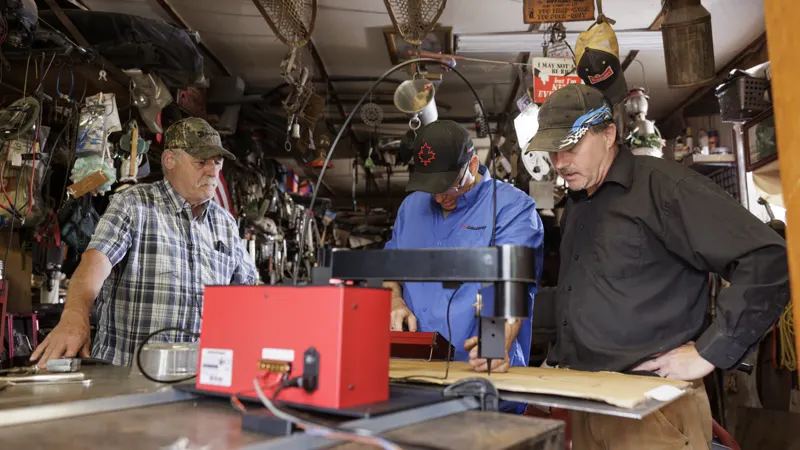 7 min read
CNC plasma cutting: what does it really cost?
Equipment, consumables, electricity, air, time: the real cost of a part, and the point where the machine becomes cheaper than subcontracting.
Read →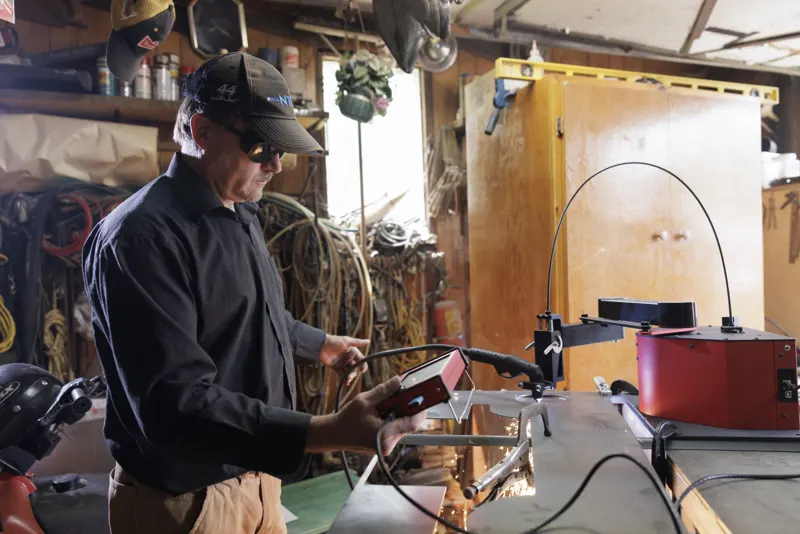 6 min read
Connecting a Hypertherm Powermax 45 XP to a CNC
CPC port, cable, divided arc voltage, consumables, air pressure, first settings: the Powermax 45 XP in automatic cutting, step by step.
Read →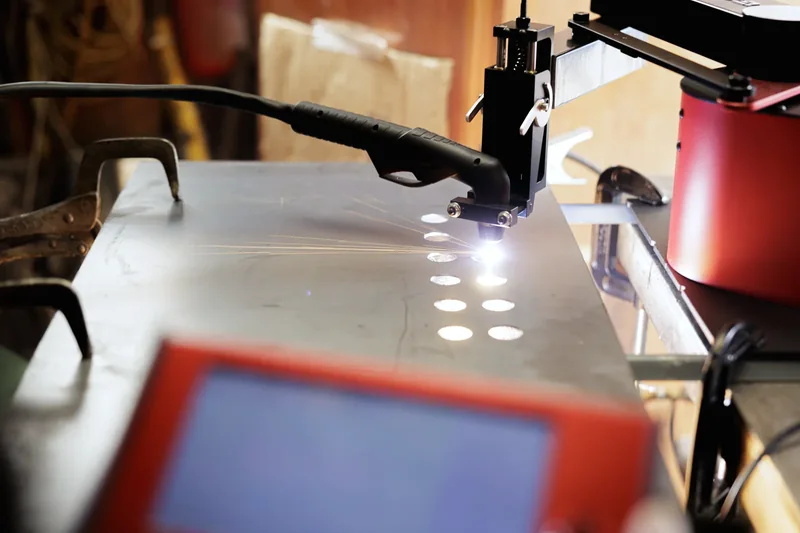 6 min read
Post base plates with plasma: from template to part
Common sizes, minimum hole diameter, stylus tracing or DXF file, cut order, deburring, galvanising: making clean base plates, in batches.
Read →The guide for real, at the workshop.
An hour in Oberentzen is worth ten articles: come with a part, leave with its copy.